Why Commercial Leaks Cost More Than They Should
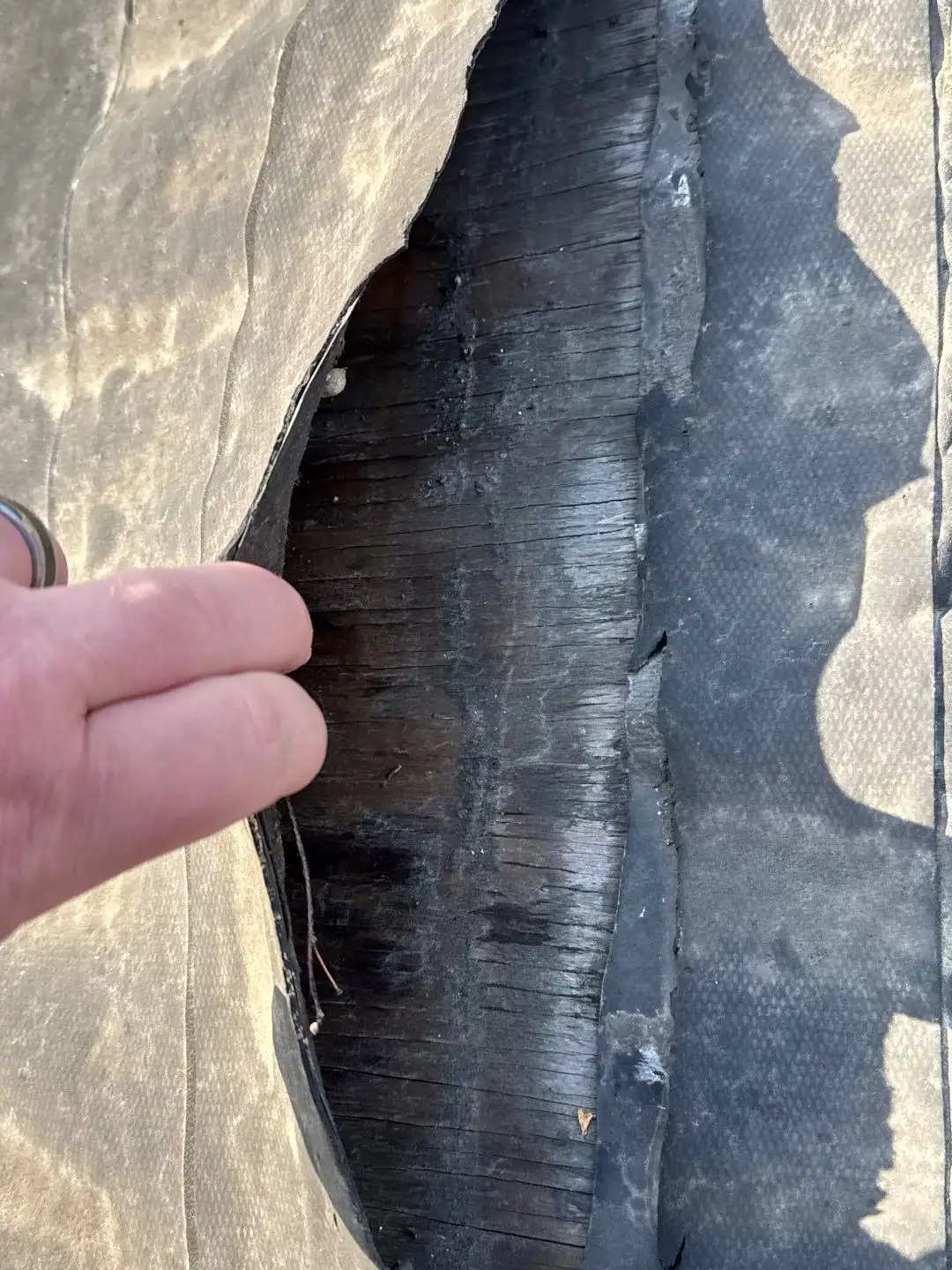
The reason a small commercial leak balloons into a large claim has almost nothing to do with the hole itself. It has to do with what sits between the membrane and the ceiling grid. Most flat and low slope roofs in Chesterton are built with rigid insulation boards, a cover board, and then a single ply membrane like TPO, EPDM, or PVC. When the membrane is breached at a seam, a fastener back out, or a failed pipe boot, water does not drip straight down. It saturates the insulation, travels along the deck looking for the lowest point, and eventually finds a penetration like a conduit, a drain, or a light can. By the time a tenant sees a stain, the wet footprint above the ceiling is often ten to thirty times larger than the visible damage. This is the same lateral travel pattern we describe in our roof leak origin detection vs repair guide, and it is the single biggest reason commercial owners overpay for restoration: they fix the stain, not the source.
The other compounding factor is timing. A leak that runs for forty eight hours into wet insulation crosses the threshold for microbial growth, which means the repair conversation is no longer just about roofing. It now involves drying, possible insulation replacement, and in some cases air quality testing. That is why we push owners to assess severity over the phone, get a tarp or temporary dry in over the breach when the leak is active, and schedule the detailed inspection as soon as the weather allows.
There is also a hidden operational cost that rarely shows up on a roofing invoice but absolutely lands on the owner. A leak in a retail space can close a register lane, push customers around wet floor signs, and trigger a slip and fall exposure that no general liability carrier wants to see twice. A leak in a medical or professional office can shut down an exam room or a server closet for a full business day. When we walk an owner through severity over the phone, we are not just asking where the water is coming in. We are asking what is below it, what cannot get wet, and whether the tenant has equipment, inventory, or records that need to be moved before the next rain band crosses central Indiana.
What Repairs Actually Cost in Chesterton
Honest pricing is hard to find in commercial roofing because every roof is a custom problem. That said, there are defensible ranges based on the kind of failure and the membrane type. The numbers below reflect typical Chesterton conditions, including freeze thaw cycles, summer thermal movement, and the common substrates we see across central Indiana commercial stock.
What these numbers do not show is the interior side of the ledger, which is often two to four times the roof repair itself. A modest leak that saturates twelve feet of ceiling tile, soaks acoustic insulation above a conference room, and wicks down a metal stud wall will easily produce a five figure interior restoration invoice even when the roof patch is under three thousand dollars. That is why the decision tree on a commercial leak is never just about the roof. It is about how quickly you can stop water entry, dry the assembly, and document everything for your carrier.
Membrane type also moves the price more than most owners realize. A clean TPO seam reweld on a relatively new roof is a fast, clinical repair when the welder can dial in heat and speed against a known thickness. An older EPDM field with chalky lap sealant and brittle flashing often needs a wider cut back and a fresh target patch, which raises labor hours even when the visible defect looks identical. PVC behaves differently again, particularly around grease exhaust where chemical attack degrades the membrane from above. None of this changes the structural template of a repair, but it does explain why two leaks that look the same in a photograph can sit at opposite ends of the ranges above.
Making the Right Call When Water Is Coming In
When a tenant calls about active water entry, the order of operations matters. First, the source needs to be controlled, which usually means a temporary membrane patch or a tarp anchored against the deck so the active flow stops. Second, the interior water has to be extracted and the affected assemblies measured for moisture, because drywall, insulation, and decking all dry at different rates. Third, the roof itself needs an honest inspection to decide whether you are looking at a localized repair or a section that has reached the end of its service life. We cover that decision in detail in our piece on commercial roof repair and the related guidance on attic water damage from roof leaks, which applies to mansards, parapet returns, and any concealed cavity above a tenant space.
One mistake we see often in Chesterton is owners authorizing a quick coating or sealant over a saturated section. Coating a wet roof traps moisture against the deck and accelerates the very failure the owner was trying to avoid. If the insulation core is wet, it has to come out before any long term repair makes sense. That is true whether the membrane is ten years old or two, and it is true whether the building is a strip retail center, a small warehouse, or a multi tenant office. The honest answer is sometimes a repair, sometimes a section replacement, and occasionally a full re roof. If a repair will buy you three to five seasons of reliable service, we will say so. If the roof is past saving and a patch is just paying twice, we will tell you that directly so you can plan capital instead of bleeding maintenance budget.
The owners who come out of a leak event in the best shape are the ones who treat the first call as the start of a paper trail, not just a service request. Photos of the interior damage before anyone touches it, a moisture map of the affected area, infrared scans where the assembly warrants it, and a written scope tied to the actual failure mode all become leverage with the carrier and protection against future disputes with tenants. That is the standard Chesterton Commercial Roofing brings to every commercial leak in Chesterton, because the goal is not just to stop today's drip. It is to leave the roof, the records, and the budget in a better position than we found them.